
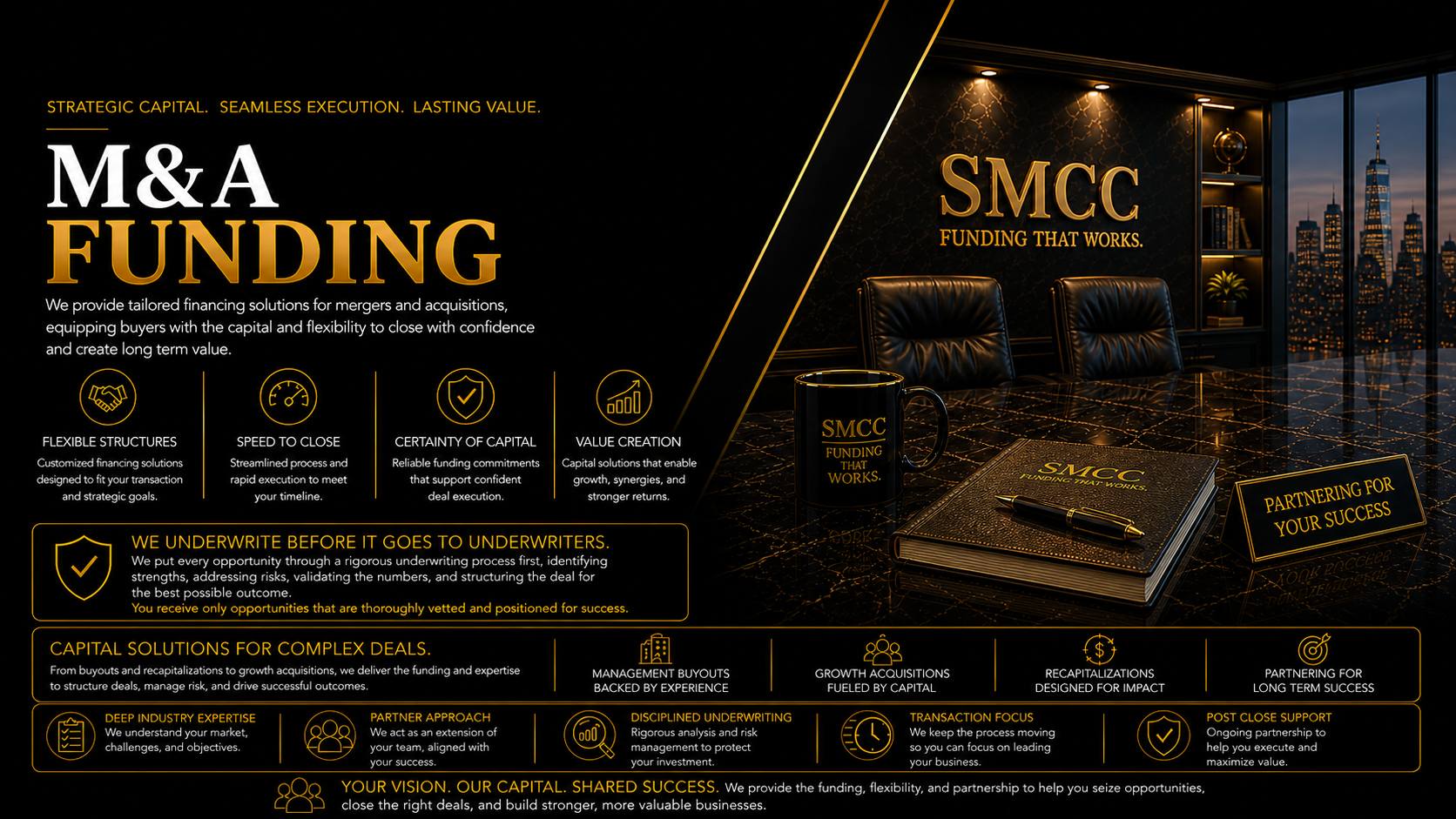
Capital structured to support integration, stability, and long term enterprise value.
Structural Readiness First
Integration Before Leverage
Capital That Supports Stability
M and A funding should strengthen the enterprise, not destabilize it during integration.
Mergers and acquisitions introduce structural change that extends far beyond the financial transaction itself. Capital must support the integration of systems, leadership, and operations in a way that preserves continuity while strengthening the combined enterprise. Scale alone does not produce stability. Stability emerges from structural alignment, disciplined integration, and capital that reflects operational reality.
M and A funding becomes appropriate when the acquisition strengthens the underlying structure of the business rather than introducing avoidable fragility. This requires leadership readiness, operational clarity, and a grounded understanding of how integration will affect both organizations. Integration introduces complexity, and capital must allow that complexity to be absorbed without destabilizing the enterprise.
Funding Range: $1,000,000 to $200,000,000
Eligibility Criteria :
- Acquisition target has verifiable financial history
- Clear strategic purpose for the acquisition
- Leadership capable of managing integration
- Operational compatibility between businesses
- Financial structure aligned with integration timeline
Integration affects multiple layers of the business simultaneously. Operational processes must align, leadership structures must stabilize, and cultural continuity must be preserved. During this period, capital structure plays a critical role. Financial obligations that exceed the business’s ability to stabilize during integration increase risk and reduce flexibility at the moment it is needed most.
Appropriate M and A funding supports integration discipline and long term structural strength. This often includes acquisitions where the strategic purpose is clear, operational leadership is prepared, and the combined enterprise benefits from improved efficiency, expanded capability, or strengthened market position. Capital should support integration, not pressure it.
Misaligned capital creates strain that often appears only after closing, when operational realities replace assumptions and structural flexibility is limited. Overestimating integration speed, underestimating operational disruption, or introducing excessive financial pressure during transition can weaken even strong businesses.
Our role is to evaluate structural readiness before capital is introduced. We assess operational compatibility, integration complexity, leadership readiness, and financial structure to ensure alignment exists before capital enters the business.
If alignment is present, capital can support stable integration and long term enterprise strength. If not, waiting preserves structural integrity.
Properly aligned M and A funding strengthens durability, improves efficiency, and supports long term enterprise value. Capital should reinforce the combined enterprise, not destabilize it during transition.
M&A Capital Readiness
Before entering the capital review process, most operators benefit from asking a few structural questions.
If these conditions are already present, M and A funding can support stable integration and long term enterprise value.
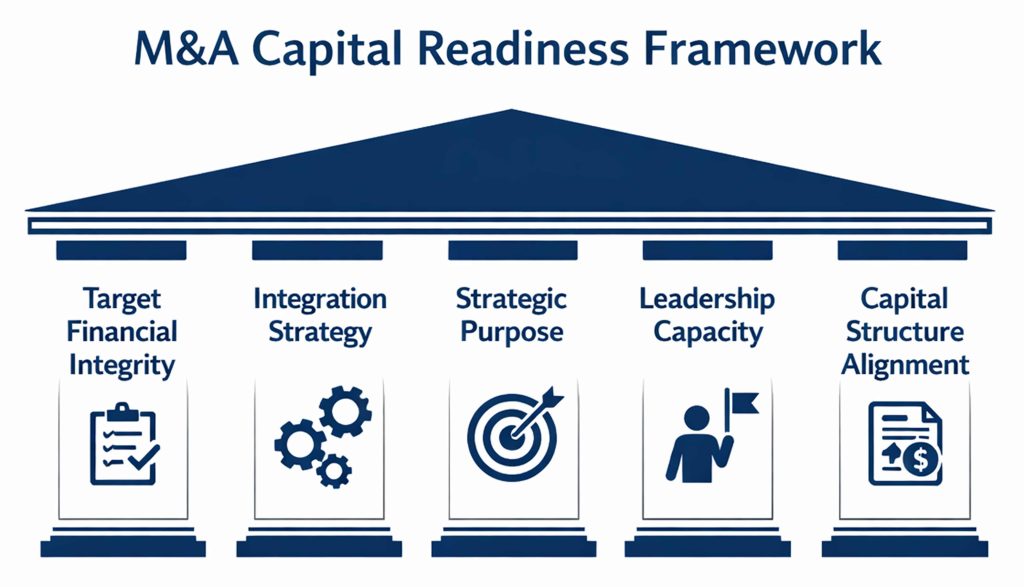
Structural Alignment Indicators
- Verified financial history of acquisition target
- Defined integration strategy
- Strategic purpose beyond revenue expansion
- Leadership capacity to manage integration
- Financial structure that allows stabilization after closing
SMCC evaluates structural readiness before introducing capital.